In this guide
- Key Takeaways
- 1. Karate Never Really Leaves You
- 2. The Biggest Excuses for Not Returning to Karate
- 3. What Changes When You Return to Karate at 40?
- 4. How to Train Around Common Injuries
- 5. How to Restart Karate: A Simple Four-Week Plan
- 6. Finding the Right Dojo as an Older Beginner
- 7. It's Never Too Late to Begin: Real Stories From Older Karate Practitioners
- The Bottom Line: You're Not Too Old. You Just Need to Begin.
The short answer is no. At 40, you're not too old to return to karate, even if you haven't practiced in 10, 20, or 30 years.
I'm 40 myself, and I've been asking the same question. Between work, family, fitness, and other responsibilities, returning to karate can feel more complicated than it did when I was younger.
The big picture: Your age isn't necessarily the biggest obstacle. Finding time, rebuilding your conditioning, managing injuries, and knowing where to start often matter more.
The good news is that you don't need to be as fast, flexible, or fit as you were at 18. You need a realistic way to begin again.
Key Takeaways
- 40 isn't too old to return to karate. You can rebuild your skills, conditioning, and confidence at your own pace.
- Karate never really leaves you. Muscle memory and previous experience can make relearning familiar techniques easier.
- You don't need much time, space, or equipment. Five minutes of basic karate practice at home is enough to begin rebuilding the habit.
- Recovery matters more than ego. Adjust your training to your current fitness level and work around injuries safely.
- Find a dojo that welcomes adults. A supportive sensei and realistic training expectations can make returning more enjoyable.
- You don't have to start over. Just start again. Consistency matters more than trying to recreate your teenage performance.
1. Karate Never Really Leaves You
My sensei used to tell me, "Karate never leaves you." The older I get, the more I appreciate those words.
If you practiced karate for years when you were younger, you probably remember more than you think. Your body may still recognize familiar punches, blocks, stances, and kata, even if performing them feels awkward at first.
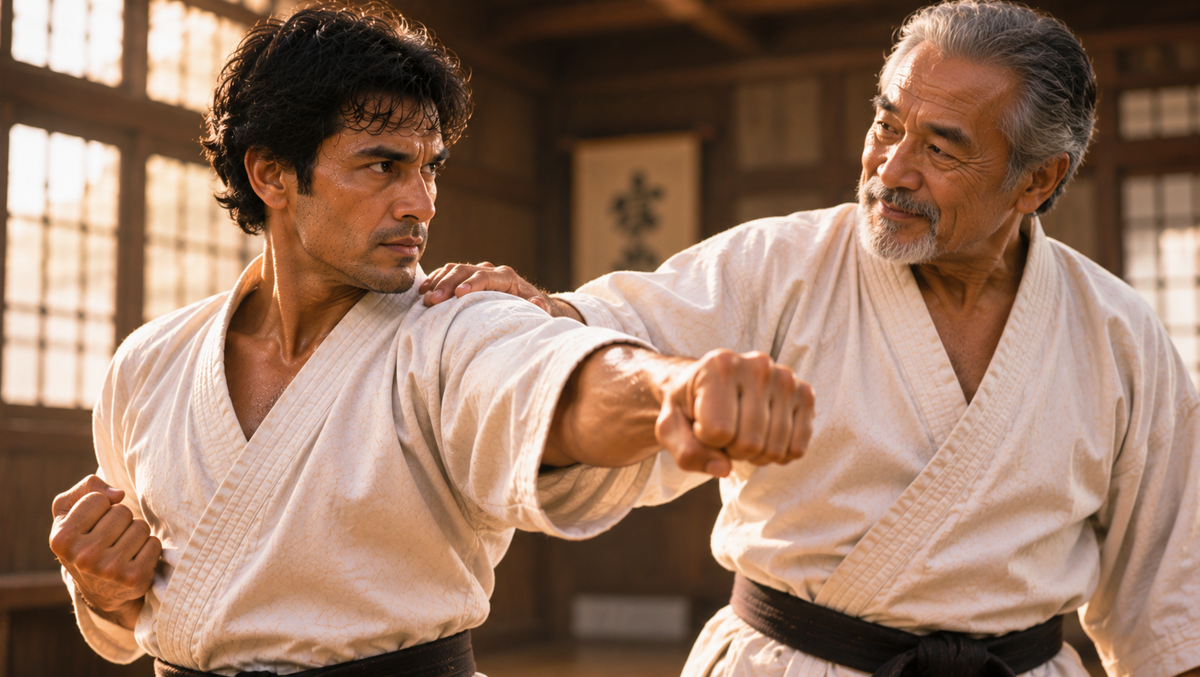
Why it matters: Previously learned motor skills can be easier to relearn than completely unfamiliar movements, although the amount you retain varies.
Some things may return relatively quickly:
- Basic techniques: Punches, blocks, and kicks you've repeated thousands of times.
- Kata: Familiar movement sequences may gradually come back through repetition.
- Coordination: Your understanding of timing, balance, and body positioning can help you relearn.
- Training discipline: You already understand what it means to practice consistently and improve through repetition.
Of course, muscle memory doesn't mean your conditioning has stayed the same. You may remember how to perform a front kick but discover that your balance, mobility, or endurance needs work.
I explore this feeling in more detail in my article, Why Do I Feel Drawn to Karate Again After All These Years?, where I discuss nostalgia, fitness, camaraderie, and why karate remains part of our identity.
The takeaway: You aren't necessarily starting from zero. You're rebuilding on a foundation you developed years ago.
2. The Biggest Excuses for Not Returning to Karate
I can think of plenty of reasons not to restart karate at 40. Most of them sound reasonable because adult life genuinely comes with more responsibilities.
But many of these obstacles have practical solutions.
Excuse 1: I Don't Have Enough Time
Between commuting, work, family, and household responsibilities, finding an hour to train can feel impossible. That's especially true if attending a dojo requires additional travel.
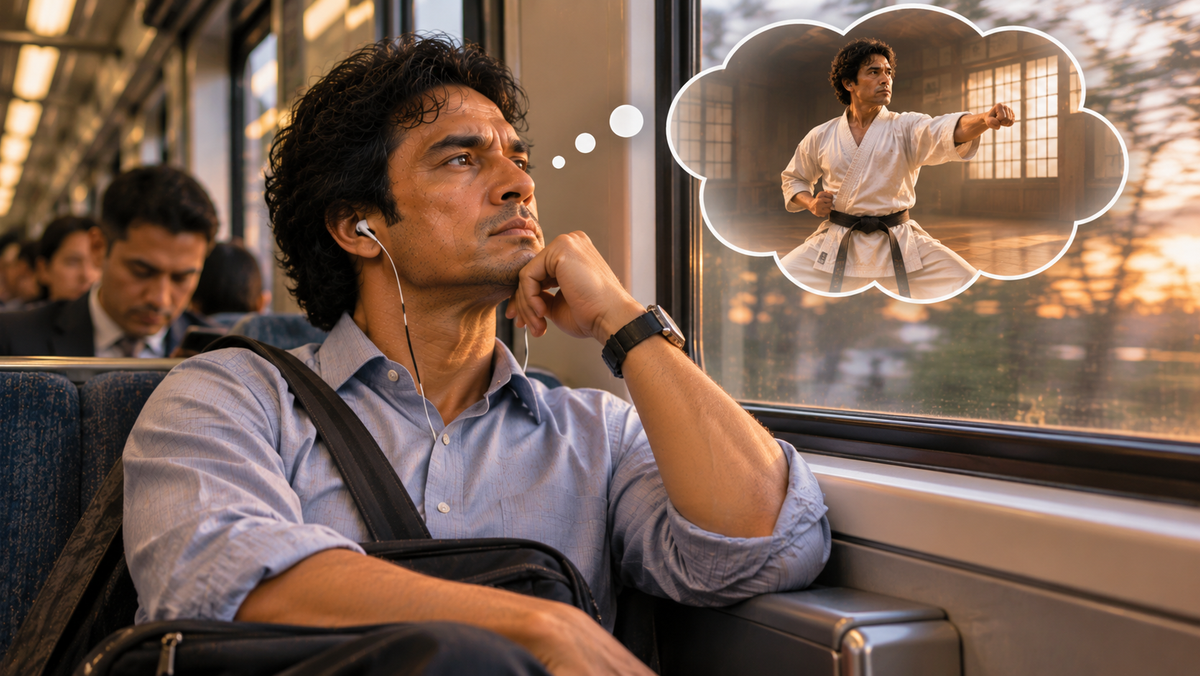
The solution: Start with five minutes and build a daily practice habit.
A short session could include:
- 1 minute of gentle warm-up movements.
- 1 minute of alternating straight punches.
- 1 minute of basic blocks.
- 1 minute of controlled front kicks.
- 1 minute practicing a familiar kata sequence.
Five minutes won't replace a full karate class, but it can help you rebuild consistency. Once the habit becomes easier, you can gradually increase your training time.
Remember: Five minutes of practice is better than another week of waiting for the perfect schedule.
Excuse 2: I Don't Have the Equipment
One of the things I love about karate is how little equipment you need to begin. You don't need a punching bag, weights, or expensive exercise machines to practice the fundamentals.
The solution: Use your own bodyweight and practice techniques in the air.
You can train:
- Kihon, including punches, blocks, and controlled kicks.
- Basic stances and transitions.
- Kata and short combinations.
- Bodyweight exercises such as squats, push-ups, and planks.
Eventually, you might want a karate gi, striking pads, or other equipment. But none of those purchases needs to happen before your first home session.
Excuse 3: I Don't Have Enough Space
Not everyone has a basement, garage, or dedicated workout room. If you're training at home, you may have only a small area in your living room or bedroom.
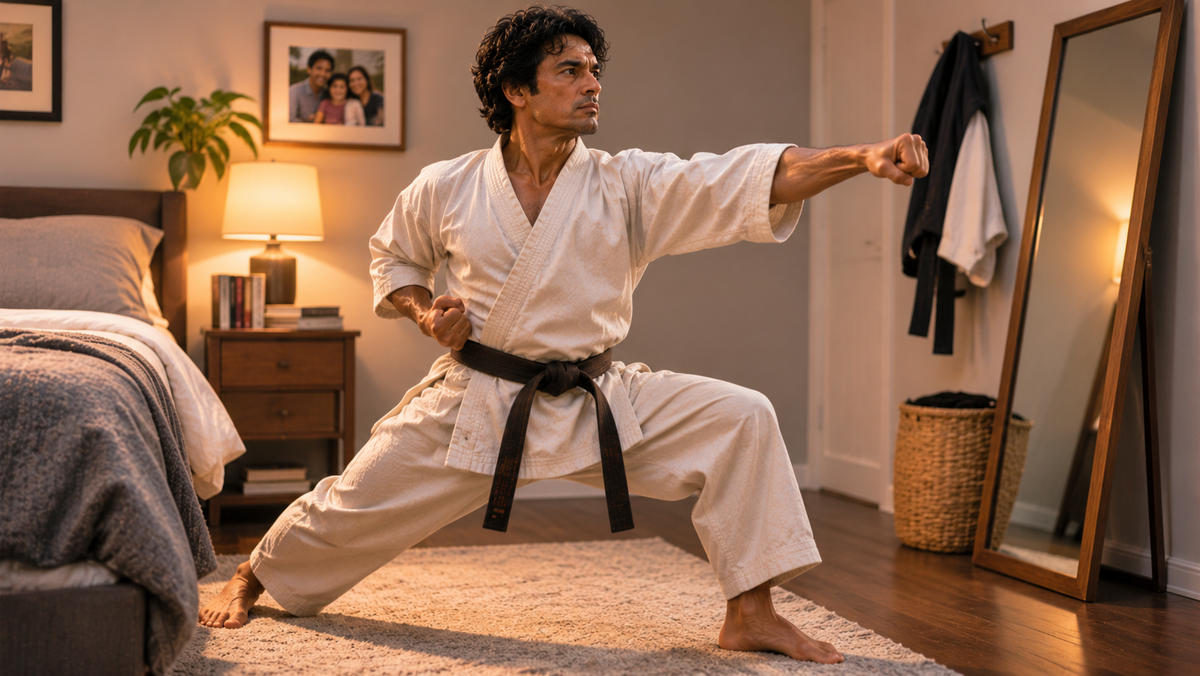
The solution: Adapt your training to the space available.
- Kihon: Practice punches and blocks while standing in place.
- Kata: Break longer sequences into smaller sections or practice individual movements.
- Stances: Work on stance depth, stability, and transitions without traveling across the room.
- Kicks: Use slow, controlled movements where there's enough clearance.
You don't need a full dojo floor to practice karate fundamentals. Just make sure you have enough room to move safely without striking furniture or other objects.
Excuse 4: I Don't Know What to Practice
This is one of the biggest challenges for returning karate practitioners. You might remember a few techniques but struggle to put together a complete workout.
Fortunately, there are more learning resources available today than when many of us first started.
Where to begin:
- YouTube: Find beginner-friendly karate lessons, kihon demonstrations, kata tutorials, and follow-along workouts.
- Sample workouts: Follow a simple routine that combines basic techniques and conditioning.
- Kata: Revisit a familiar kata from your original karate style.
- Training apps: Use structured lessons or progress trackers to help establish consistency.
- Karate-adjacent training: Strength training, walking, mobility work, and other martial arts can complement your practice.
- Books: Revisit traditional karate manuals for terminology, principles, and technical reference.
- Local dojos: Find an instructor who can assess your current ability and help you progress safely.
If you practiced Shotokan karate, Heian Shodan is a good kata to revisit. You can try my Heian Shodan Kata Workout to begin reconnecting with familiar movements.
I'm also developing Shado Karate to help people practice karate at home. One of my goals is to make returning to training less confusing for adults who remember the basics but don't know how to restart.
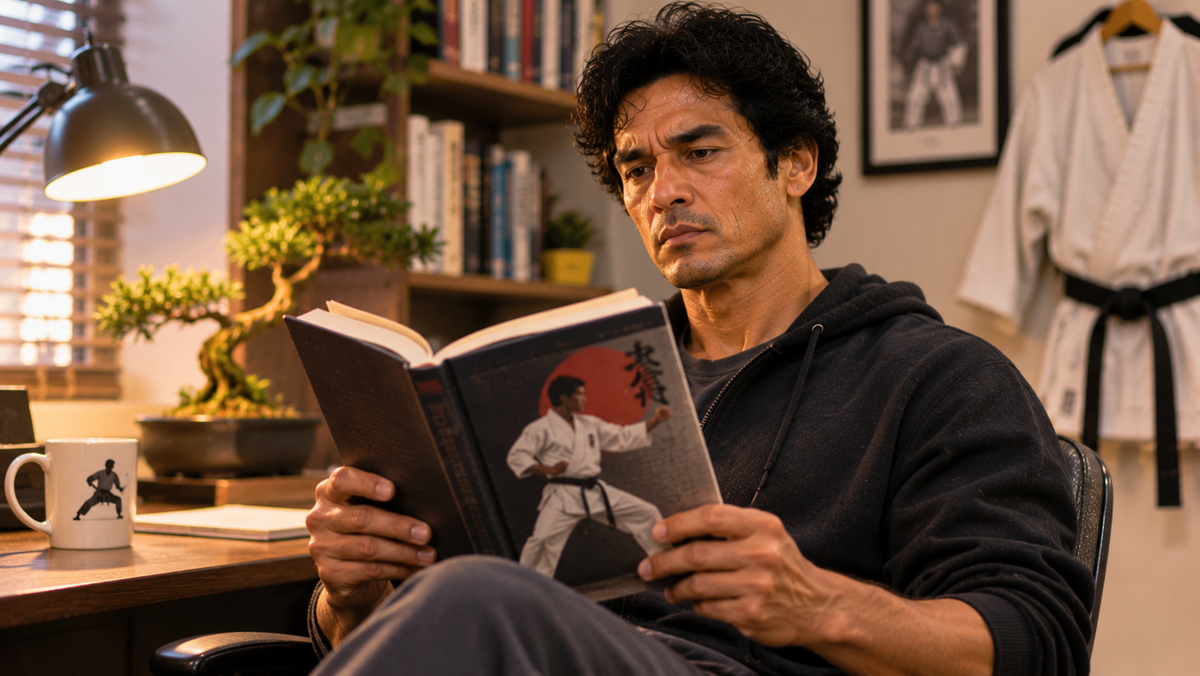
Excuse 5: I Can't Afford Karate Lessons
Depending on where you live, dojo memberships can be expensive. Add uniforms, grading fees, and transportation, and the costs can become another obstacle.
The solution: Start with free resources and spend money only when you're ready.
YouTube lessons, basic home workouts, and publicly available training guides can help you get moving again. If you already own a gi or training equipment, you may not need to purchase anything.
Home practice has limitations, particularly when it comes to technical feedback and sparring. But you don't need a paid membership just to begin rebuilding your training habit.
Excuse 6: I'm Not Healthy Enough
This concern deserves more attention than the others. If you're overweight, out of shape, managing a medical condition, or recovering from an injury, returning to karate may require adjustments.
The solution: Start at your current ability level rather than trying to recreate your old workouts.
You might begin with:
- Gentle mobility exercises and basic stances.
- Slow punches and blocks with controlled technique.
- Short sessions with rest breaks.
- Gradually increasing repetitions, duration, and intensity.
If you have a significant medical condition, persistent pain, or concerns about exercising safely, consult a healthcare professional before increasing your activity.
Why it matters: You don't have to get into peak condition before starting karate, but your training should respect your current health and limitations.
3. What Changes When You Return to Karate at 40?
Returning to karate at 40 isn't exactly the same as training at 15 or 20. Your body may respond differently to demanding workouts, particularly after years of inconsistent activity.
That doesn't mean you can't improve. It means you should approach training with a little more patience.
You May Be Slower Than You Remember
Your punches might feel less explosive, your kicks might not reach as high, and your endurance may be lower. That's normal after a long break, regardless of age.
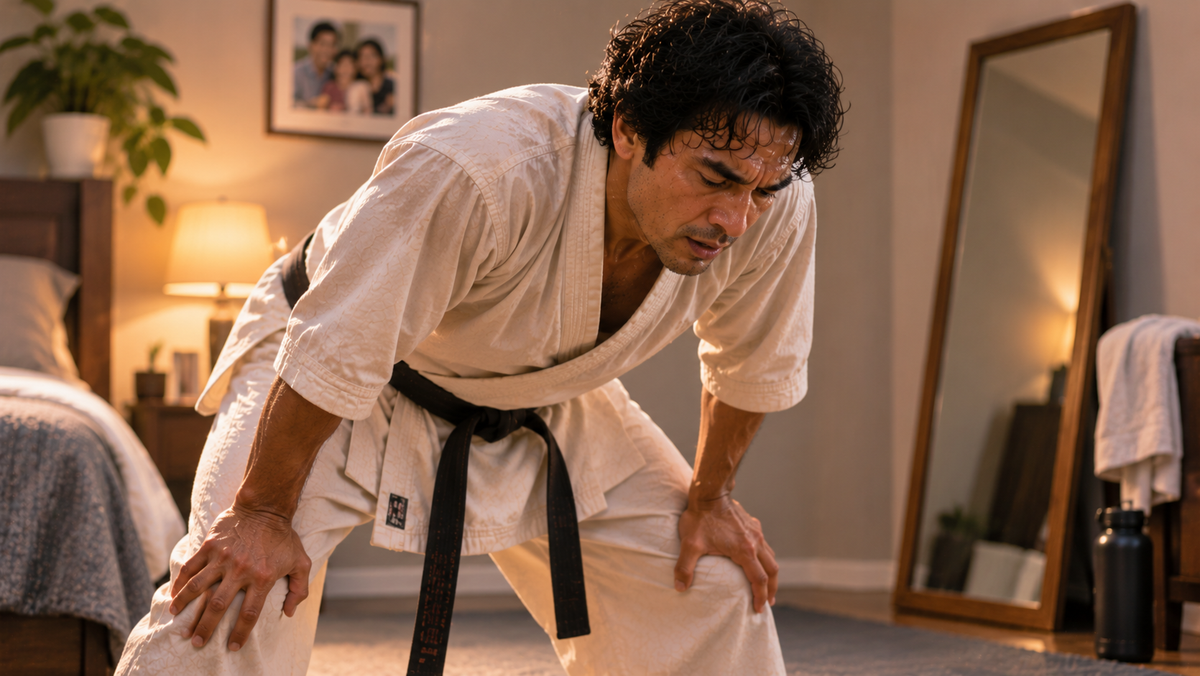
The key: Don't compare your current performance to your teenage peak or to younger students in the dojo.
Focus instead on:
- Improving your technique from week to week.
- Gradually increasing your conditioning.
- Building strength and mobility.
- Learning to move efficiently.
- Allowing adequate recovery between demanding sessions.
Karate is you versus you, not you versus everyone else.
Recovery Matters More Than Ego
One mistake I want to avoid is returning with the mindset that I can immediately handle the workouts I did as a teenager. Enthusiasm is great, but it doesn't automatically mean your body is prepared.
Start with manageable sessions and increase the difficulty gradually. Rest, sleep, and recovery are part of training, not signs of weakness.
4. How to Train Around Common Injuries
At 40, you may have accumulated a few aches and pains that weren't there when you were younger. Knee, back, and neck discomfort can affect which karate movements feel comfortable.
The big picture: You can often modify training, but persistent or worsening pain shouldn't be ignored.
If You Have Knee Pain
Deep stances, repeated kicks, and rapid directional changes may aggravate certain knee problems.
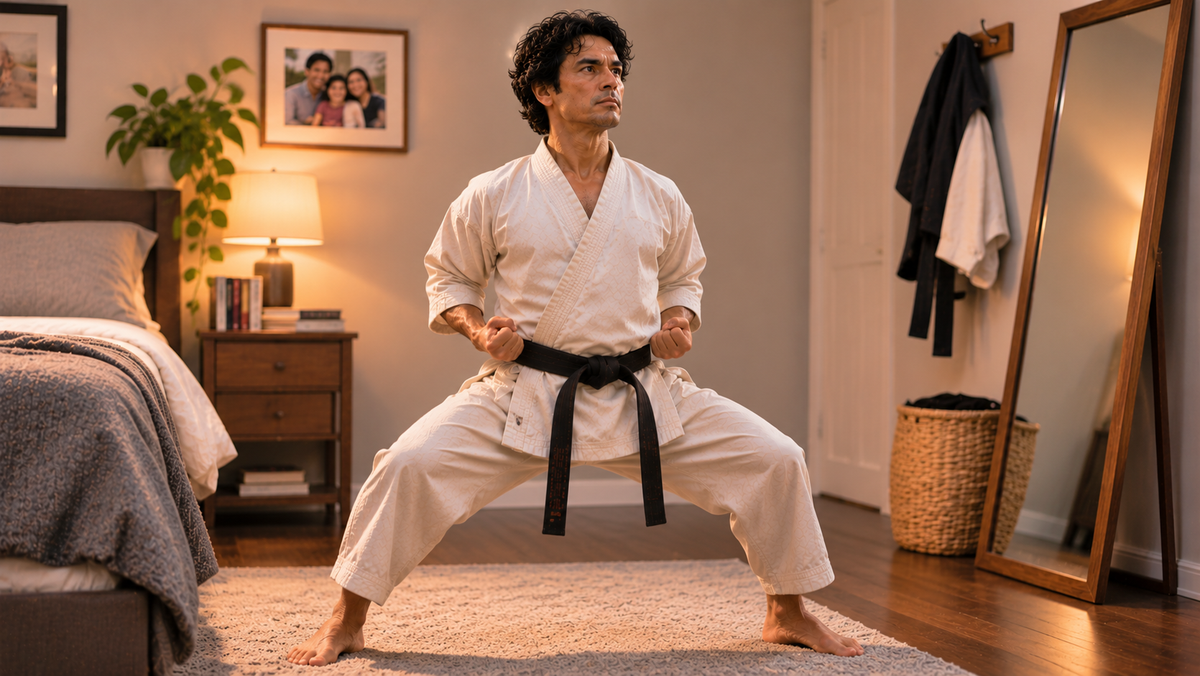
- Use a shallower horse stance rather than forcing yourself into a deep position.
- Reduce repetitions of movements that cause discomfort.
- Build leg strength and mobility gradually.
- Seek medical or physical therapy guidance for persistent pain, swelling, or instability.
If You Have Back Pain
Certain exercises, kicks, and twisting movements may place additional demands on your back.
- Avoid sit-ups or other movements that aggravate your symptoms.
- Use gentle, comfortable mobility exercises rather than forcing stretches.
- Build core strength with exercises appropriate for your condition.
- Get persistent, worsening, or radiating back pain evaluated.
If You Have Neck Pain
Rapid head movements, tension during techniques, or poor posture may make neck discomfort worse.
- Warm up gradually and avoid sudden or forceful neck movements.
- Keep your head and neck in a comfortable, neutral position during techniques.
- Reduce the intensity of movements that trigger pain.
- Seek medical advice if symptoms persist or involve numbness, weakness, or dizziness.
The takeaway: Adjusting a technique isn't giving up on karate. It's finding a way to continue training safely.
5. How to Restart Karate: A Simple Four-Week Plan
If you're returning after years away, I recommend beginning with a manageable routine. The goal of your first month should be rebuilding consistency and confidence rather than maximizing intensity.
| Week | Frequency | Focus |
|---|---|---|
| 1 | 3 × 5 minutes | Basic punches, blocks, and gentle stances |
| 2 | 3 × 10 minutes | Add controlled kicks and simple combinations |
| 3 | 3 × 15 minutes | Introduce familiar kata and light conditioning |
| 4 | 3 × 20 minutes | Combine kihon, kata, mobility, and conditioning |
This is an example progression, not a requirement. If a week feels too difficult, repeat it or reduce the duration until your body adapts.
A Sample 15-Minute Home Karate Workout
Once you're comfortable with short sessions, try this:
- 3 minutes — Warm-up: Marching, gentle mobility, and easy stance transitions.
- 4 minutes — Kihon: Straight punches, rising blocks, low blocks, and controlled front kicks.
- 4 minutes — Kata: Practice a familiar kata or a short sequence of techniques.
- 2 minutes — Conditioning: Modified push-ups, bodyweight squats, or a plank.
- 2 minutes — Cooldown: Easy movement and relaxed breathing.
You can modify the routine to match your fitness level and available space. Prioritize technique and control over speed, especially during your first few weeks.
6. Finding the Right Dojo as an Older Beginner
While home training is a great starting point, returning to a dojo can provide something that videos and apps can't fully replicate: direct instruction and a community of people who share your interest.
But not every dojo will be the right fit for someone returning at 40.
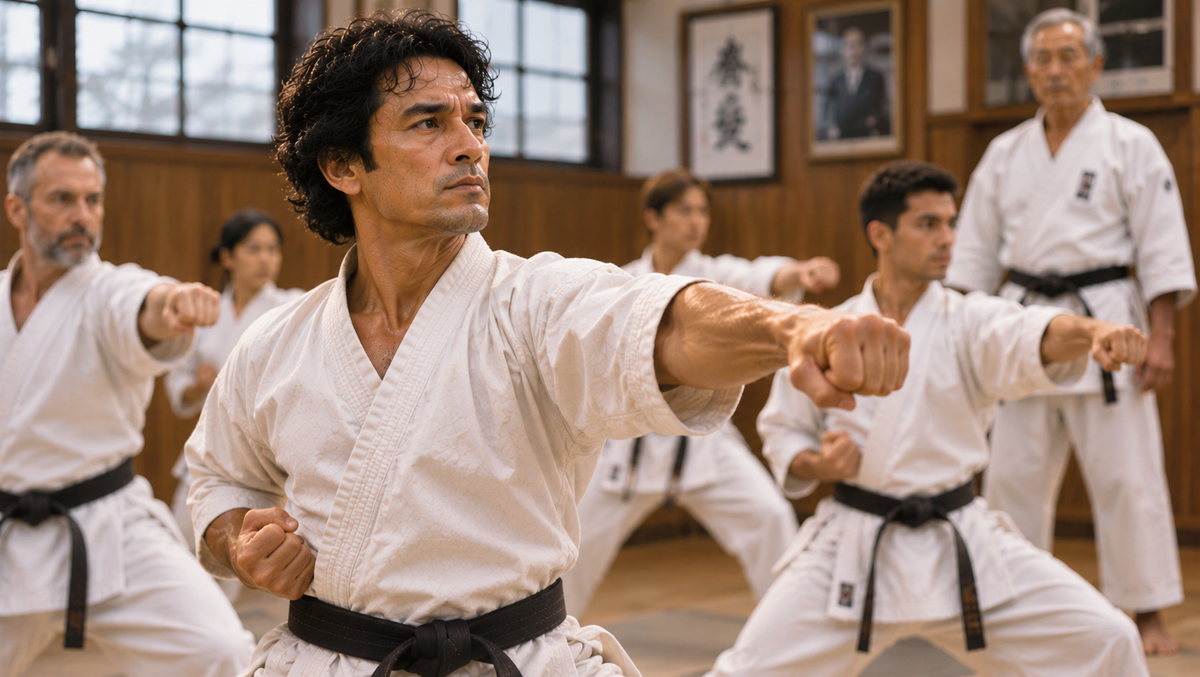
What to look for:
- Adult-friendly classes: Find a school that welcomes beginners and returning practitioners, not just children or competitive athletes.
- A supportive sensei: Look for an instructor who emphasizes technique, safety, and individual progress.
- Flexible training expectations: Ask whether you can begin with one or two classes per week.
- Appropriate sparring: Make sure contact levels and sparring expectations match your experience and comfort.
- A positive environment: Observe how students interact and whether the atmosphere feels encouraging.
Before enrolling, ask if you can watch or participate in a trial class. Let the sensei know about your previous karate experience, how long you've been away, and any injuries or physical limitations.
Why it matters: The right dojo should help you become a better version of yourself, not pressure you to prove that you're still the athlete you were 20 years ago.
7. It's Never Too Late to Begin: Real Stories From Older Karate Practitioners
One of the most encouraging things about karate is hearing from people who started or returned later in life. Some began in their 40s or 50s, while others continued training well into their 60s and beyond.
I came across a Reddit discussion titled Thoughts on Adults Starting Karate in Their 40s?, where several practitioners shared their experiences.
Returning to Karate at 63 While Living With Cancer
One story particularly stood out to me. A practitioner using the username revolution70 shared that he had returned to karate at 63 despite living with cancer.
At the time of his comment, he was 65 and training three times a week. He described karate as a valuable outlet for stress and negativity, helping him focus on the present rather than constantly thinking about illness.
What struck me wasn't just his age or the physical challenges he faced. It was that karate had given him something meaningful to look forward to during a difficult period of life.
His experience doesn't mean karate can treat cancer or that everyone with a serious medical condition should train. But it demonstrates how meaningful an appropriately adapted activity can be, even when life presents significant obstacles.
Other Adults Are Starting and Returning, Too
The same discussion included several other encouraging stories:
- Starting at 45: One commenter described beginning karate at 45, enjoying the challenge, and appreciating the friendships formed with students of different ages.
- Returning at 38: Another practitioner returned after briefly training as a teenager and described karate as one of the best decisions he'd made for his fitness.
- Starting at 43: One adult shared that he had earned his yellow belt and noticed improvements in mobility, strength, and confidence.
- Returning after 25 years: A 40-year-old practitioner described returning after a long break, training three times a week, and helping teach children's classes.
These are personal accounts, not scientific evidence that everyone will experience the same results. But they challenge the assumption that karate is only for children, teenagers, or young athletes.
Why it matters: Your age doesn't automatically determine whether karate can become a meaningful part of your life.
You don't have to become a tournament champion or earn a black belt for karate to be worthwhile.
Your goals might simply be to:
- Improve your health and physical fitness.
- Learn something challenging and rewarding.
- Rebuild confidence and discipline.
- Make new friends and find a community.
- Enjoy an activity that gives you a sense of purpose.
For me, returning to karate at 40 is about reconnecting with something that helped shape my childhood. I want to rebuild my fitness, sharpen my skills, and discover what kind of karate practitioner I can become today.
The Bottom Line: You're Not Too Old. You Just Need to Begin.
If you're 40 and wondering whether it's too late to return to karate, my answer is simple: No, it isn't.
You might be slower, less flexible, or less conditioned than you remember. You might have less time and more responsibilities, but none of those things automatically means you can't practice karate again.
Start with five minutes, learn at your own pace, and make adjustments when needed. If you can join a supportive dojo, even better.
You don't have to train like you're 20 to enjoy karate at 40.
My sensei was right: Karate never really leaves you. Sometimes you just need to give yourself permission to start again.